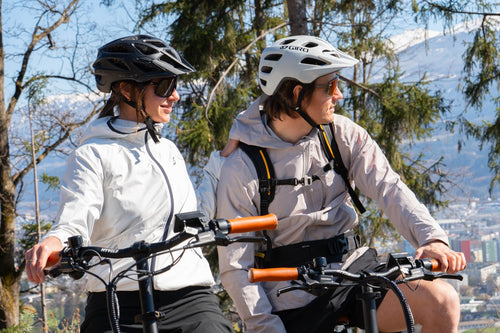
E-bikes are no longer just for frequent riders or athletically ambitious commuters. They are becoming increasingly attractive, especially for occasional riders – for those who only get on a bike now and then: for a weekend trip, a ride to the market, or a relaxed tour along the lake.
By Vincent Augustin 3 minutes read time


Published: June 30, 2026
But is it even worth buying an e-bike if you only use it occasionally? The short answer: Yes – if it suits your riding style.
This article will tell you what to look for in an e-bike for casual riders, which models make sense, and which mistakes you should avoid when buying one.
Occasional cyclists do not use their bicycles daily, but rather situationally:
Weekend trips
Leisure trips during the holiday
short distances in the city
spontaneous trips in good weather
The important thing is that the bicycle should be easy to use, require little maintenance and offer immediate riding enjoyment without requiring any prior training.
This is exactly where the e-bike demonstrates its strengths.
Many casual cyclists are apprehensive about long distances, inclines, or headwinds. An e-bike overcomes precisely these obstacles:
The electric motor ensures that even longer distances are not daunting. Thus, "Maybe I'll go for a bike ride again" becomes a genuine "I'm going!"
You don't need to build up your fitness first. Even after a long break, the ride feels pleasant and controlled.
Distances that were previously "too far" suddenly become realistic – for example, the lake 15 km away or the nearest beer garden outside the city.
Three categories are particularly relevant for occasional drivers:
Perfect for short, relaxed trips around town.
upright sitting position
comfortable entry
often with luggage rack and lighting system
👉 Ideal for shopping or short trips
The all-rounder for leisure and tours.
Slightly sportier than city bikes
suitable for longer distances
often with a larger battery
👉 Ideal for weekend trips
Especially comfortable for everyday use.
very easy ascent and descent
high everyday usability
especially popular with beginners
👉 Ideal when comfort is paramount
Many buyers make the mistake of purchasing too much power. For occasional drivers, a solid, harmonious engine is more important than maximum power.
Bosch eBike Systems: Very reliable, harmonious riding experience, ideal for beginners and everyday use
Shimano: Quiet, efficient and low-maintenance, especially common in the trekking sector
A powerful motor is not absolutely necessary. More important is smooth, consistent assistance that doesn't kick in abruptly.
Occasional riders rarely need XXL batteries.
400–500 Wh: sufficient for city use and short trips
500–625 Wh: a good all-rounder for weekend trips
Over 750 Wh: more suitable for frequent drivers or long mountain tours
Important: A larger battery also means more weight. And you'll definitely notice that when you ride the bike without assistance.
An aggressive MTB or speed pedelec sounds exciting, but is often oversized for everyday use.
More torque sounds good, but often doesn't bring any real advantage in everyday use.
A hard saddle or a sporty seating position can quickly reduce the enjoyment of riding.
Even an e-bike needs maintenance – but good components significantly reduce the effort.
For occasional drivers, high-end features are not what matters, but rather:
comfortable seating position
simple operation
reliable battery
stable brakes
Good tires for different surfaces
An e-bike should not be a technical challenge, but an uncomplicated companion .
Yes - and often more than you might think.
Even if you only ride 1-2 times a week or month, an e-bike will change your mobility behavior:
You use your bike more often than your car.
Spontaneous trips are becoming more realistic.
Movement becomes natural again
Many owners even report that they drive significantly more than originally planned – simply because it's fun and no longer presents a hurdle.
An e-bike for occasional riders is not a luxury, but often a real mobility booster. Maximum performance is not important, but rather a balanced, comfortable, and reliable setup .
If you're looking for a bike that moves you without pressure but with lots of fun, then an e-bike is exactly the right choice – even if you only use it occasionally.
Enter your daily route and see how much CO₂ you emit with different modes of transport.
CO₂ emission comparison
| Transport mode | CO₂ per trip (kg) | CO₂ per week · 5 days (kg) | CO₂ per year · 52 weeks (kg) |
|---|---|---|---|
| Car (petrol) | – | – | – |
| Public transport | – | – | – |
| E-Bike (grid electricity) | – | – | – |
| E-Bike (solar power) | – | – | – |
| Regular bike | – | – | – |
Guideline values. Actual CO₂ emissions depend on driving style, vehicle type and electricity source.