


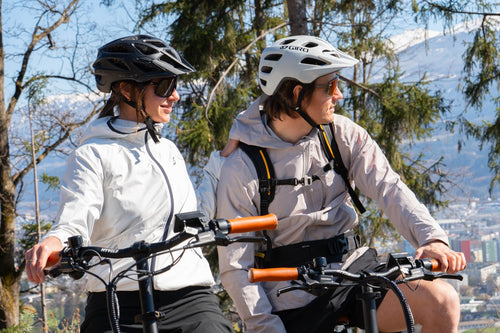

E-bikes are becoming increasingly lighter, sportier, and more natural in their riding experience. This is precisely where the so-called Light Assist e-bike comes in. Instead of maximum motor power and huge batteries, this new category focuses on a different goal: an e-bike that rides almost like a normal bicycle – only with a gentle tailwind.
By Fabian Huber 4 minutes read time


Published: June 25, 2026 | Updated: September 24, 2026
Especially sporty commuters, gravel riders, and mountain bikers are currently discovering the advantages of these minimalist e-bikes. But what exactly is a "light assist e-bike"? Who would benefit from such a model? And how does it differ from classic e-bikes?
A light assist e-bike is a particularly lightweight e-bike with reduced, natural motor assistance. Compared to classic pedelecs, the focus here is not on maximum power or extreme range, but on the most natural riding experience possible. Modern light e-bikes often weigh only between 15 and 20 kilograms. Classic e-bikes, on the other hand, often weigh significantly more than 23 kilograms.
This is made possible by:
smaller and lighter engines
more compact batteries
lighter frames made of carbon or high-quality aluminum
minimalist components
The goal: The bike should be comfortable to ride even without assistance.
Many riders are now longing for a more authentic cycling experience. While full-power e-bikes provide enormous support, they can sometimes feel heavy and sluggish.
Light Assist models deliberately take a different approach:
less weight
more agility
more direct handling
more natural pedaling feel
subtle support instead of a "moped feeling"
This concept is particularly compelling in everyday urban life or on sporty tours. Modern light e-bikes ride much more like a classic bicycle than a typical heavy e-bike.
The most important feature is the low overall weight. Many models weigh between 15 and 19 kilograms. This makes them easier to carry, allows them to accelerate faster, and makes them feel significantly more agile overall.
This is particularly noticeable in everyday life:
Stairs become less problematic
The wheel is easier to store.
Driving without a motor remains pleasant
While classic e-bikes often use motors with 85 Nm or more, many Light Assist systems operate with around 40 to 60 Nm of torque.
That means:
less brutal support
more self-help
natural step
harmonious driving behavior
Many riders describe the riding experience as being like "cycling with a tailwind".
Light Assist e-bikes typically use smaller batteries to save weight. Batteries with capacities between 250 and 400 Wh are commonly used.
This reduces the maximum range, but in practice this is often perfectly sufficient:
Commuting routes
After-work rides
sporty tours
daily commutes in the city
Many manufacturers also offer so-called range extenders – small additional batteries for longer tours.
Lightweight e-bikes fully demonstrate their advantages in city traffic:
rapid acceleration
easy handling
easy to wear
subtle design
Many models hardly look like classic e-bikes.
Those who want to continue pedaling actively, but appreciate support on climbs or in headwinds, will often find the perfect balance here.
Especially appreciated by road cyclists and gravel fans:
direct handling
the smaller mass
the natural driving feel
The light e-MTB segment is also booming in the mountain biking sector. On trails, riders benefit from the reduced weight and improved agility. Technical sections are often easier to navigate playfully than with heavy, full-power e-MTBs.
| feature | Light Assist E-Bike | Classic e-bike |
|---|---|---|
| Weight | approx. 15–20 kg | often 23–28 kg |
| Engine power | moderate | very strong |
| Driving experience | natural & sporty | comfort-oriented |
| reach | medium | high |
| Handling | agile | rather difficult |
| Area of application | sporty & urban | Everyday life & long tours |

