For those seeking the ultimate downhill experience, a downhill bike is a must. These specially designed mountain bikes are built for speed, stability, and control on steep, technical trails. But what makes a true downhill bike, and what should you look for when buying one? We take a detailed look at the most important aspects.
By David Weichel 2 minutes read time | Published: October 17, 2026

Downhill bikes are characterized by an aggressive geometry: a long wheelbase, slack head angle, and low center of gravity ensure maximum stability even at high speeds. Unlike cross-country or trail bikes, the focus is less on climbing efficiency and more on precise handling on steep descents.
A slack head angle (between 63° and 65°) allows for controlled riding through root sections and drops. At the same time, a shorter top tube provides more agility on tight trails.
A downhill bike is equipped with massive suspension – typically 200 mm of travel front and rear. This full-suspension setup absorbs hard landings, root sections, and rocks.
Modern shock absorbers offer adjustable compression and rebound damping , allowing the bike to be individually tailored to weight, riding style, and trail conditions. Those who enjoy aggressive riding should definitely invest in a bike with high-quality suspension – the investment is worthwhile for increased control and safety.
Downhill riding means speed – and speed demands powerful brakes . Large-diameter hydraulic disc brakes (200 mm rotors front and rear) are standard. They offer consistent braking power even in wet or muddy conditions and prevent overheating on long descents.
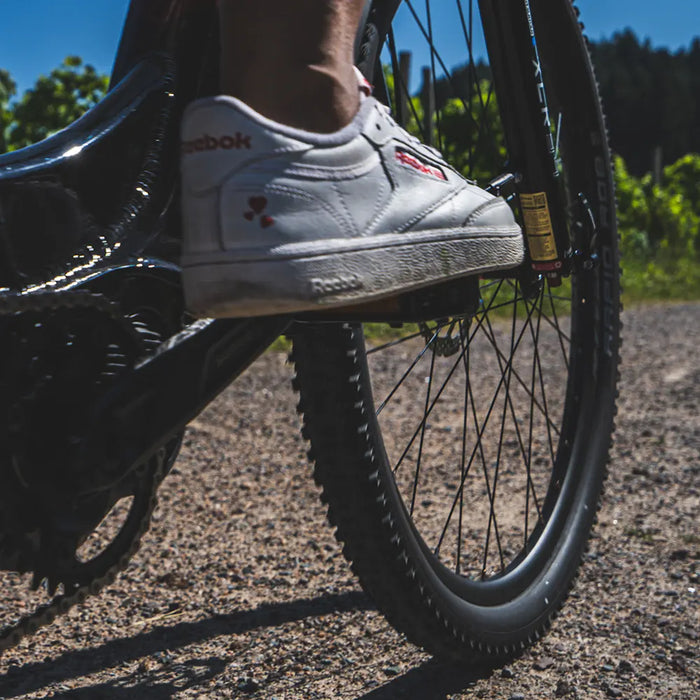
Wide tires (2.5–2.8 inches) with an aggressive tread pattern provide grip in corners and on loose surfaces. Downhill bikes use robust, often tubeless-compatible wheels to minimize the risk of punctures and allow for optimal tire pressure adjustment. Stability and damping are more crucial than weight – a lighter bike is secondary.
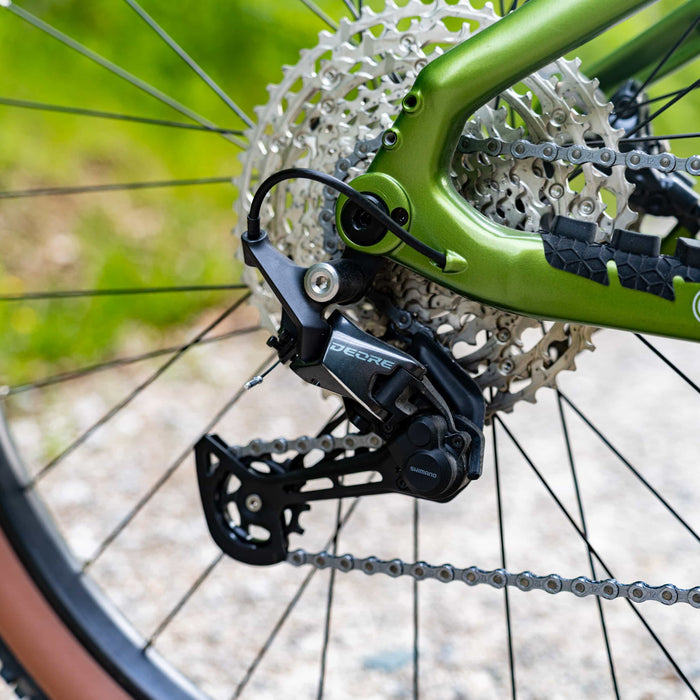
All components of a downhill bike are designed for durability: reinforced cranks, long-lasting chain guides, robust handlebars and stems. Even the saddle is designed for short, aggressive descents – comfort on long rides is a secondary consideration.
Those who value tours with climbs are better off choosing an enduro bike . Downhill bikes are pure downhill machines – usually heavy and inefficient uphill. Enduro bikes offer a compromise between uphill and downhill performance, while pure downhill bikes deliver peak performance on every descent.
At high speeds on technical trails , protective gear is essential : a full-face helmet, back protector, gloves, and knee/shin guards are standard for any serious downhill rider. No matter how good your bike is, without protection a descent can quickly become dangerous.
A downhill bike is the first choice for anyone seeking an adrenaline rush and maximum control on steep, technical descents. Those who value high-quality suspension, powerful brakes, and robust components can master any descent safely and quickly. For pure uphill tours or long trails, an enduro bike is better suited – the downhill bike remains the ultimate discipline for downhill flow.