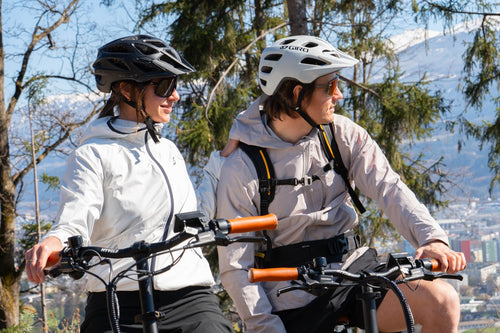
The debate surrounding mandatory helmet use for bicycles, and especially e-bikes, has been ongoing in Germany for years – and it is gaining significant momentum again due to the increasing prevalence of more powerful e-bikes. At the same time, the legal situation remains clear: there is no general helmet requirement; it only applies to faster S-Pedelecs.
By Helena Burgardt 3 minutes read time


Published: September 20, 2026
But with e-bikes, which accelerate ever faster, become heavier, and are often used like small mopeds in everyday life, the debate is shifting. The question is therefore not just "helmet yes or no?", but also: How much regulation does increasingly fast and diverse cycling mobility need?
The strongest point made by the proponents is clear: protection against serious head injuries .
Studies and accident analyses show that a helmet can significantly reduce the risk of serious head injuries – especially in falls without external influence or collisions in urban traffic. This argument is particularly compelling in the area of e-bikes because:
E-bikes often travel at a constant speed of 25 km/h or more.
The acceleration is higher than with classic bicycles.
The weight of the wheels increases (battery + motor)
the user group is becoming increasingly older and therefore more vulnerable
Experts and rescue services point out that even seemingly moderate speeds such as 25 km/h can have serious consequences in a fall, especially in the case of head injuries.
With the increasing number of accidents in the e-bike segment, political pressure is also growing to tighten regulations or at least introduce a helmet requirement for certain groups.
On the other hand, there are compelling arguments against a legal obligation.
A key criticism is that mandatory helmet laws could discourage people from cycling. Experience from other countries suggests that mandatory regulations can indeed reduce bicycle use. This would have indirect negative consequences for:
Everyday movement and fitness
Cardiovascular health
Low-CO₂ mobility in cities
Many traffic experts and political actors deliberately rely on voluntary participation. The idea is that people should decide for themselves whether to wear a helmet – depending on the risk, the route, and their speed.
Another important point: The helmet only protects the head, not from accidents themselves. The crucial points remain:
Infrastructure (cycle paths, intersections, sight lines)
Consideration in mixed traffic
Speed and traffic rules
Especially in cities, many accidents are caused by infrastructure problems, not by a lack of head protection.
The real dynamic in the debate comes not from the classic bicycle, but from the e-bike itself.
Modern systems have changed dramatically:
more powerful engines (better acceleration uphill and in city traffic)
higher average speeds in everyday life
Increased weight due to batteries and frame reinforcement
new forms of use (commuting, cargo bikes, trailers)
This increasingly blurs the line between bicycle and light motor vehicle.
An additional effect: the so-called "speed paradox" – many drivers feel safer, even though the physical energy increases significantly in a fall.
Even without a legal obligation, many health arguments clearly speak in favor of wearing masks voluntarily:
fewer severe head injuries from falls
especially useful for older drivers and e-bike users
high benefit under adverse conditions (rain, winter, city traffic)
Everyday life clearly shows that the helmet is not a symbol of fear, but of risk management.
The helmet law remains a classic area of tension between safety and freedom .
Arguments in favor are strengthened by increasing e-bike speeds and accident risks.
Arguments against emphasize health, personal responsibility, and freedom of mobility.
Overall, there are many arguments in favor of a pragmatic middle ground: no general obligation, but a clear recommendation - especially for e-bike riders, commuters and older people.
Because in the end, the most important thing is not the regulation itself, but its effect:
A helmet does not prevent accidents, but it can significantly reduce their consequences.
And that is precisely why it remains – especially in the age of fast e-bikes – one of the simplest and most effective decisions for better health in everyday life.