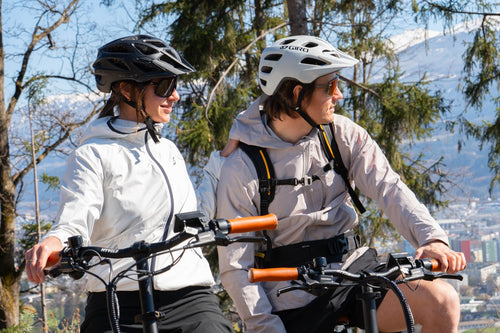
For many road cyclists, longer rides are the epitome of freedom: rolling for hours, enjoying the scenery, clearing their heads – and pushing their endurance to a new level. At the same time, long rides place special demands on the body, equipment, nutrition, and mental strength .
By Fabian Huber 3 minutes read time


Published: February 12, 2026
Whether you're preparing for a cycling marathon event, want to improve your basic endurance, or simply enjoy long tours: with the right preparation, longer rides won't be a chore, but the highlight of your training week.
A longer drive begins where you leave your comfort zone:
from approximately 2.5–3 hours travel time
often 80–150 kilometers , depending on the profile
predominantly in the basic skills area (GA1 / Zone 2)
The focus is not on intensity , but on duration, efficiency, and consistency. This is precisely what makes these sessions so valuable – and demanding at the same time.
Long, steady bursts of activity are particularly effective at training your cardiovascular system. Your body learns to work efficiently for hours on end.
At low to moderate intensity, your body increasingly relies on fat reserves – a key advantage for long races and Alpine stages.
Spending several hours in the saddle improves your concentration, patience, and mental resilience. The last few kilometers, in particular, are a mental game.
On long journeys you'll immediately notice if:
The saddle fits
the cleats are correctly adjusted
Handlebar width and reach are correct
Longer rides are the best "real-world test" for your setup.
Never start a long workout on an empty stomach. Ideally, you should have eaten a meal.
2-3 hours beforehand
rich in carbohydrates
easily digestible
Examples:
Oatmeal with banana
White bread with honey
Rice with a little yogurt
Before longer trips, you should think about:
Route profile (elevation gain!)
Wind direction
Supply options
Change in weather
A rough plan prevents unnecessary stress – and empty storage space.

A common mistake: eating too little, eating too late .
👉 Start consuming energy regularly from minute 30 onwards
Recommended guidelines:
60–90 g of carbohydrates per hour
Combination of:
bars
Gels
bananas
isotonic drinks
Drinking is also crucial:
500–750 ml per hour
significantly more in hot weather
Don't forget electrolytes
Those who try to save money here will pay the price later with the infamous "hunger curse".
Longer rides are not races . Ride consciously and in a controlled manner.
Pulse: Zone 2
Feeling: "I could have a conversation"
Wattage: usually 65–75% FTP
Especially at the beginning, the following applies:
👉 Be patient – the length will come naturally.
Going too fast almost always backfires in the final kilometers.
Change grip position regularly
Relax your shoulders
Incorporate short cadence variations.
to get out of the saddle every now and then
Skin protection also plays a role:
good cycling shorts
Chamois cream for very long tours
dry clothes
Eventually, your mind will get tired. This can help:
Divide the route into sections
established eating and drinking routines
positive self-talk
Focus on footfall, breathing, or landscape
Longer rides are not just training for the legs – but also for the mind.
After 3-5 hours in the saddle, the most important part begins: recovery.
Carbohydrates + protein (e.g. Recovery Shake)
Drink enough fluids
loose rolling or stretching
plenty of sleep
relaxed movement
no hard intervals
This is how you ensure that the training effect really takes hold.
Longer rides are the foundation of any good road cycling fitness. They improve your endurance, efficiency, and mental strength – provided you approach them in a structured and deliberate manner .
With the right preparation, sufficient energy, and a controlled pace, long tours don't become an ordeal, but rather genuine pleasure rides. And that's precisely where you develop the fitness that will make you strong in races, Alpine passes, or long group rides.