Numerous studies show that low grip strength is associated with an increased risk of mortality, cardiovascular disease, falls, and functional decline. It thus serves as a kind of "biological early warning system" for the overall health of the body.
What exactly is grip strength?
Grip strength describes the maximum force that the hand and forearm muscles can generate when gripping. It is usually measured with a hand dynamometer and can be easily, quickly, and reproducibly recorded.
Crucially, grip strength is not an isolated muscle value , but a reflection of complex processes in the body, including:
It is precisely this complexity that makes it such a strong predictor of longevity.
Grip strength as a predictor of life expectancy
Large cohort studies – including those from Europe, the USA and Asia – consistently show:
-
People with low grip strength have a significantly higher risk of death.
-
The correlation exists regardless of age, gender, or body mass index.
-
Grip strength is sometimes a better predictor of mortality than blood pressure or BMI.
A well-known analysis from the PURE study (over 140,000 participants) showed that every decrease in grip strength of 5 kg is associated with a significantly increased risk of death from all causes.
In short: Statistically, those who are weak have a shorter lifespan.
Relationship between grip strength and muscle loss (sarcopenia)
Muscle mass naturally declines with age – a process known as sarcopenia. The loss of muscle mass is particularly critical, but so is the loss of muscle strength.
Grip strength is considered one of the earliest markers of this process. A decrease in grip strength often indicates:
-
declining neuromuscular efficiency
-
reduced activity in everyday life
-
incipient functional limitations
Because the hand muscles are strongly controlled by the nervous system, they are particularly sensitive to aging processes of the nervous system.
Grip strength, falls and independence in old age
Good grip strength is closely linked to functional independence. It influences, among other things:
A weak grip strength demonstrably increases the risk of falls – and thus also the risk of fractures, hospital stays and the need for care.
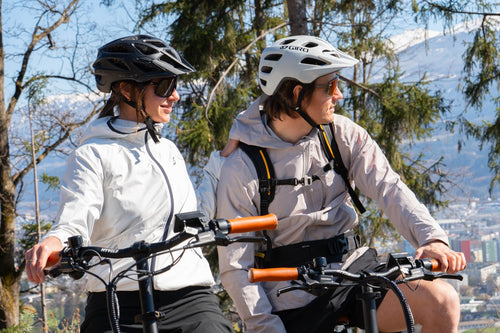
In this context, it also plays a role in everyday activities such as safe braking and steering when cycling in old age , as declining hand strength can make it difficult to control the brake levers and handlebars – especially in stressful or dangerous situations.
The relationship between grip strength and metabolic health is also interesting. Low grip strength correlates with:
Muscle strength is metabolically active. It improves glucose uptake, increases basal metabolic rate, and has an anti-inflammatory effect. Grip strength serves as an easily measurable proxy for overall muscle health.
Why endurance training alone is not enough
Endurance training such as walking, cycling or swimming is excellent for cardiovascular health – but it is not enough to maintain grip strength in the long term.
Without targeted exercise, the strength of the forearm and hand muscles decreases even in active people. This is particularly problematic for individuals who do a lot of endurance training but hardly any strength training.
Therefore, longevity requires both :
How can grip strength be specifically improved?
The good news: Grip strength can be trained very effectively – even at an older age.
Proven approaches include:
-
classic strength training (pulling exercises, deadlifts, rowing)
-
Carrying heavy objects (“Farmer's Walks”)
-
Hanging from the pull-up bar
-
Hand trainers or kneading balls
-
functional everyday stresses such as cycling
Even two to three short sessions per week can achieve measurable improvements.
Grip strength as a simple longevity check
Due to its high predictive value, grip strength is increasingly used as a screening tool – both in geriatrics and in preventive medicine.
It indirectly answers key questions:
-
How resilient is the musculoskeletal system?
-
How good is the neuromuscular control?
-
What is the risk of functional decline?
Those who want to age healthily in the long term should not leave their grip strength to chance.
E-bikes – support for active seniors
An e-bike can significantly increase independence and mobility in old age. It provides pedal assistance, relieves stress on the joints, and allows for longer tours without physical overexertion.
For seniors with declining grip strength, an e-bike is particularly practical:
- Easy to brake: The brake levers require less force, but remain safe to operate.
- Stable grip: The handlebars are easy to hold even with weaker grip strength.
- Longer distances: The electric assistance enables movement and training without straining the hands.
This way, grip strength is maintained while you remain active and can enjoy cycling.
Conclusion: Small power, big message
Grip strength is one of the most underestimated yet most meaningful markers of longevity. It combines muscle health, nervous system, metabolism, and functional performance into a single, easily measurable value.
Those who preserve or improve them are not only investing in stronger hands – but in greater independence, security, and years of life.