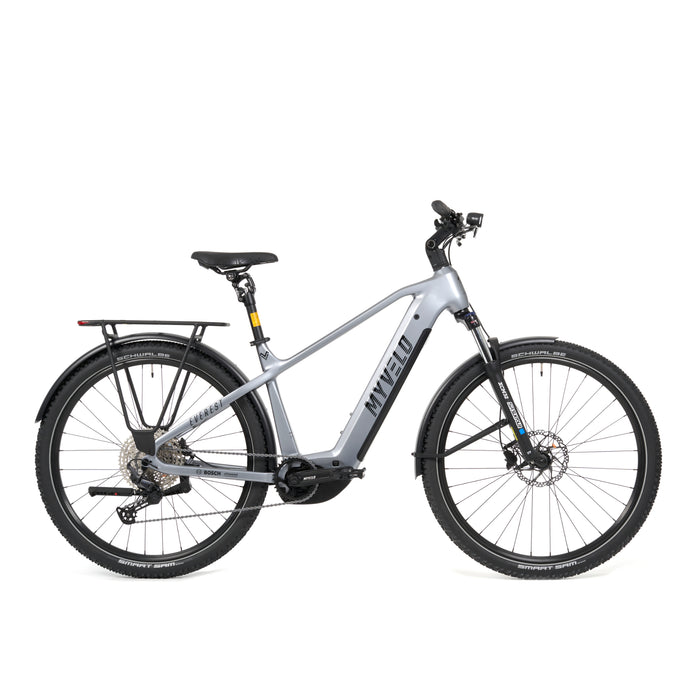
And how can you get the most out of it – especially for commuters who rely on sustainable mobility such as (e-)bikes or combined modes of transport?
In this article, you'll learn everything you need to know about the commuter allowance.
What is the commuter allowance?
The commuter allowance is a tax regulation that allows employees to claim their travel expenses between home and their primary workplace – regardless of the mode of transport used.
This means: Whether by car, train, bicycle, or e-bike – the decisive factor is the distance, not the means of transport.
How much is the commuter allowance?
Currently (as of 2026):
Important: Only the one-way distance counts, not the round trip.
👉 Example: Anyone commuting 25 km to work can calculate:
Multiplied by the number of working days in a year, this results in a considerable sum.
Who can use the commuter allowance?
The allowance is generally open to anyone who:
Apprentices, part-time workers, or mini-jobbers can also benefit.
Which means of transport are allowed?
A big advantage: The commuter allowance is independent of the mode of transport.
This means it can be used for:
-
car or motorcycle
-
public transport (bus, train)
-
bicycle or e-bike
-
on foot
-
combinations (e.g., train + folding bike)
This is where it gets particularly interesting for modern commuters.
Commuter allowance and sustainable mobility
More and more people are opting for intermodal mobility – i.e., the combination of different modes of transport. Particularly popular:
The great advantage: Even if you don't use a car, you receive the same allowance.
👉 This makes sustainable alternatives financially particularly attractive.
Example: E-bike instead of car
Thus, the commuter allowance becomes a real lever for environmentally friendly commuting.
Special considerations for public transport
Those who travel by bus or train can choose:
👉 The "Günstigerprinzip" (principle of favoring the taxpayer) applies: You can claim the higher amount.
Is there an upper limit?
Yes, but with limitations:
However, for bicycle or public transport commuters, the limit can be relevant.
Home office and commuter allowance
The commuter allowance does not apply to days spent in the home office.
Instead, you can use the home office allowance.
Important:
You may not claim both for the same day.
Tips to get the most out of it
1. Record working days correctly
The more actual commuting days you declare, the higher the reimbursement will be.
2. Calculate route optimally
The shortest or most traffic-favorable route counts – not necessarily the fastest.
3. Combine modes of transport cleverly
Intermodal commuting (e.g., e-bike + train) can reduce costs without tax disadvantages.
4. Exceed the flat-rate allowance for income-related expenses
The commuter allowance only really takes effect when you exceed the employee lump sum.
Commuter allowance as a game-changer for commuters
The commuter allowance is more than just a tax detail. It:
-
effectively reduces commuting costs
-
makes sustainable mobility more attractive
-
also rewards bicycle and e-bike users
-
supports flexible commuting models
Especially in the context of rising mobility costs and growing environmental awareness, it is becoming increasingly relevant.
Conclusion: Get more out of your commute
Anyone who commutes regularly should definitely use the commuter allowance. It offers the chance to save several hundred to thousands of euros annually – regardless of how you travel.
Particularly exciting: In combination with modern mobility solutions such as the e-bike or the folding bike, the commute not only becomes cheaper but also more sustainable and healthier.
👉 This turns the daily commute into real added value – financially and personally.