In this article, you will learn what sustainable mobility means, which modes of transport are particularly environmentally friendly, and why the bicycle – especially the e-bike – plays a crucial role in the future of mobility.
What does sustainable mobility mean?
Sustainable mobility describes a transport system that combines three central goals:
1. Protect the environment
Transport accounts for a large portion of CO₂ emissions. Sustainable mobility reduces greenhouse gases, air pollution, and noise.
2. Conserve resources
Fossil fuels are finite. Sustainable modes of transport rely on energy efficiency and renewable energies.
3. Improve quality of life
Less traffic means more space, better air, and quieter cities.
Sustainable mobility thus not only pursues ecological goals but also improves people's daily lives.
Why sustainable mobility is becoming increasingly important
The transport sector is one of the largest emitters of greenhouse gases. In many industrialized countries, transport causes over 20% of total CO₂ emissions.
At the same time, there is an increase in:
The consequences are traffic jams, air pollution, and high infrastructure costs.
Sustainable mobility offers a solution: more efficiency, fewer emissions, and better use of existing traffic areas.
Sustainable modes of transport in comparison
Bicycle
The bicycle is one of the most sustainable modes of transport available.
Advantages:
-
no direct CO₂ emissions
-
very low energy consumption
-
minimal space requirements
-
positive effects on health
Especially in cities, many journeys are under 5 km long – a distance that is ideal for cycling.
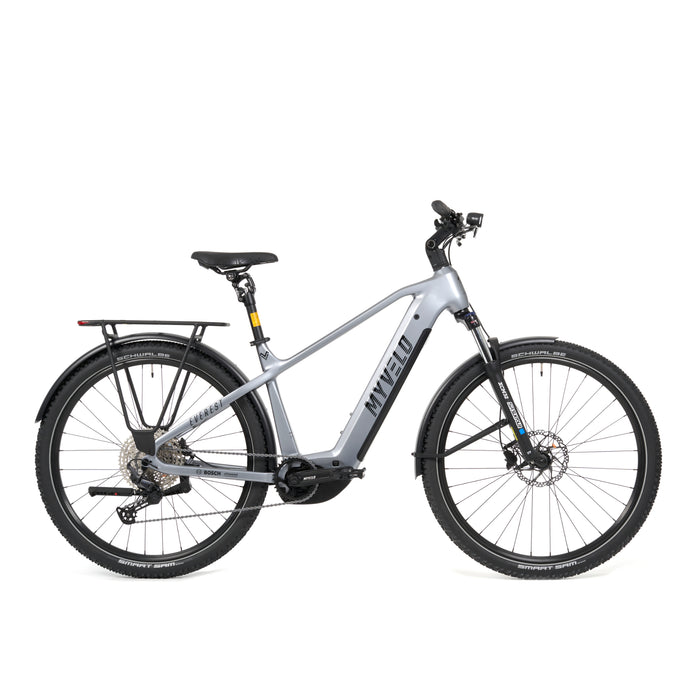
E-bike
E-bikes significantly expand the possibilities of sustainable mobility.
Thanks to electrical assistance, you can:
An e-bike requires only a fraction of the energy compared to a car. Even if the electricity comes from the normal power mix, emissions are significantly lower than with internal combustion vehicles.
The combination with renewable energy is particularly interesting – for example, charging the battery with solar power.
Public Transport
Buses, trams, and trains transport many people simultaneously and are therefore significantly more efficient than individual car travel.
Advantages:
Public transport becomes particularly sustainable when it is powered by electricity from renewable sources.
Carsharing and Micromobility
Not every route can be covered by bicycle. For such cases, new mobility concepts are emerging:
-
Carsharing
-
E-scooters
-
Rental bicycles
-
Combined mobility offers
The advantage: vehicles are shared instead of everyone owning their own.
This reduces resource consumption and parking space requirements.
What role do e-bikes play in sustainable mobility?
E-bikes are now considered one of the most important components of sustainable mobility.
Reasons for this are:
1. Replacement for short car journeys
Many car journeys are shorter than 10 km. This is where e-bikes are particularly efficient.
2. Commuting without traffic jams
E-bikes enable fast travel through cities – often even faster than by car.
3. Low energy consumption
The energy consumption of an e-bike is extremely low.
4. Combination with public transport
Many commuters combine e-bikes and trains.
This creates a flexible and environmentally friendly transport system.
Sustainable mobility begins in everyday life
Sustainable mobility doesn't mean having to completely give up your car. Often, small changes are enough:
Even small decisions can have a big long-term impact on the environment and quality of life.
Conclusion: The future of mobility is sustainable
Sustainable mobility is more than a trend – it is a necessary development for modern cities and societies.
Bicycles, e-bikes, public transport, and new mobility concepts show that environmentally friendly transportation is already possible today.
The e-bike in particular combines comfort, efficiency, and sustainability and will therefore play a central role in the mobility of the future.
Those who use sustainable modes of transport not only reduce emissions but also benefit from more exercise, lower costs, and a higher quality of life.