


Entdecke den MYVELO
E-Bike Onlineshop
Entdecke Dein Traum E-Bike im MYVELO Onlineshop. Direkt vom Hersteller Dein Fahrrad aussuchen.
A folding bicycle tire is a tire that is lightweight and foldable compared to clincher tires due to its flexible Kevlar or Aramid belt and thin carcass. Folding tires are usually more expensive than clincher tires, but they are also lighter and easier to transport.
Folding tires are often preferred by road cyclists , mountain bikers and other cyclists who value weight savings and ease of handling. The folding belt allows the tire to be more compact and space-saving than a clincher tire, which is especially useful when carrying a spare tire on a bike tour or wanting to dismantle the tire for transport.
Folding tires also often perform better than clinchers because they can withstand higher air pressure and thus have lower rolling resistance. They also offer better traction and cornering grip due to the flexible casing and materials used.
If you use folding tires on your bike, there are a few things you should keep in mind:
Installation : Make sure you install the folding tire correctly and make sure it is seated properly on the rim. Folding tires can be a little trickier to install than clinchers, so it's important to make sure you install them correctly to avoid flats or other problems.
Air pressure : Folding tires often have a higher air pressure range than clincher tires, so it's important to use the correct air pressure for your folding tire. Check the air pressure regularly to ensure optimal performance and durability.
Care : As with all tires, it is important to check your folding tire regularly for cracks, cuts or other damage. Clean the tire after rides and remove any small debris that may have penetrated the tire.
Compatibility : Make sure the folding tire you choose is compatible with your rim and bike frame. Folding tires can have different sizes and tread types, so it's important to make sure they're compatible with your bike.
Transport : Folding tires can be easily folded and transported, which is ideal if you are carrying a spare tire on a bike tour. However, be careful not to bend or damage the tire when folding it and carrying it in your bag or backpack.
By considering these tips, you can ensure that you get the most out of your folding tires and get optimal performance and durability.
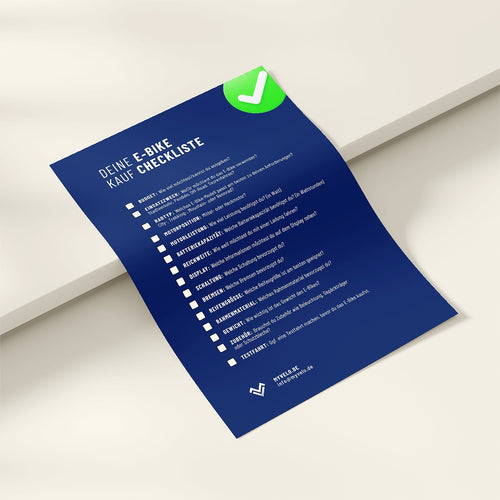

Entdecke den MYVELO
Entdecke Dein Traum E-Bike im MYVELO Onlineshop. Direkt vom Hersteller Dein Fahrrad aussuchen.

Dein Traumrad
MYVELO hat einen Flagshipstore in Oberkirch und ist regelmäßig auf Messen vertreten. Komm in unseren Flagship Store und probiere Dein Traum Bike aus. Lass Dich von uns zu Deinen Anforderungen beraten.

Leasen statt kaufen
Spare mit Leasing! Finanziere Dein Traum E-Bike ganz einfach über Deinen Arbeitgeber. MYVELO unterstützt Dich im Leasing-Prozess bei Deinen Fragen.

Everyone knows the classic bike lock moment: you get off your bike, rummage in your backpack, click the heavy-duty lock open, and hope it holds. But with rising e-bike prices, smart technology, and increasingly professional theft, security has also evolved. Alongside mechanical locks, a new generation of protection systems is establishing itself: electronic anti-theft devices – the invisible chain .

Fat bikes are polarizing: Hardly any other bicycle divides opinions as much as models with wide tires. Critics often cite rolling resistance, weight, or aerodynamics, deeming fat bikes inefficient. But a closer look quickly reveals that fat bikes are not just show bikes, but versatile, high-performance all-rounders.

Aufsteigen, losfahren, anhalten, absteigen – das passiert bei jeder Fahrt mehrmals und läuft bei den meisten völlig automatisch. Trotzdem sind genau diese Sekunden die wackeligsten Momente auf dem Rad: Du bist langsam, stehst oft nur auf einem Bein und hast das Gewicht des Rades seitlich neben Dir. Wer die passende Technik für seinen Rahmen kennt, steigt entspannter auf, fährt ohne Schlingern an und kommt auch mit einem schweren E-Bike sicher wieder zum Stehen.