The function of the chainring on an e-bike
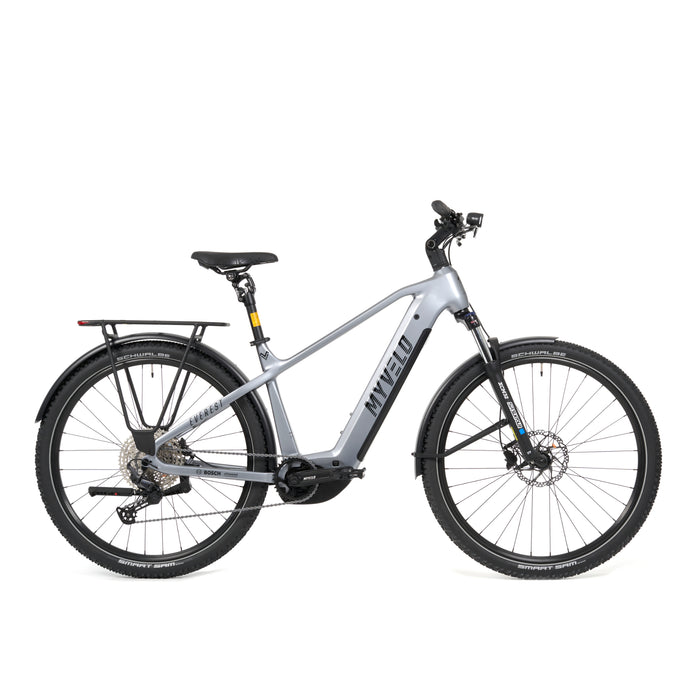
On an e-bike, the chainring transfers the power from the crank to the chain – and thus to the rear wheel. In combination with the mid-drive motor, it ensures that the motor's assistance is used optimally. Unlike with conventional bicycles, the motor's gear ratio plays a crucial role here: depending on the chainring size, the motor can transfer its power to the road more efficiently or lose momentum, especially when starting or climbing hills.
Chainring size and gear ratio
The number of teeth on the chainring is crucial:
-
Large chainring (e.g., 50 teeth) : Ideal for high speeds on flat terrain. Pedaling feels smoother, and you pedal further with each revolution. The motor often needs to engage less, as the power is efficiently transferred to the rear wheel – at the cost of increased effort when starting or climbing steep inclines.
-
Small chainring (e.g., 34 teeth) : Offers a lower gear ratio, making pedaling easier. The advantage is particularly noticeable on inclines or heavily loaded e-bikes: The motor can provide optimal support, the rider has to exert less effort, and the riding experience remains comfortable.
Different chainrings for the mid-drive motor
E-bikes with mid-drive motors like the Bosch Performance Line CX are sensitive to chainring size. Smaller chainrings make starting and riding on hilly terrain easier, as the motor can reach its maximum torque more quickly. Larger chainrings, on the other hand, allow for higher top speeds at a constant pace, for example on long bike paths or roads.
Another effect: The pedaling cadence changes depending on the chainring. Choosing a small chainring means you pedal faster, feel less resistance, and have more consistent motor assistance. With large chainrings, the cadence drops, pedaling feels more forceful, and you feel the rider exerting more effort.
Practical tips for choosing the chainring
-
Consider the terrain : Hilly terrain → smaller chainring; flat terrain → larger chainring.
-
Consider your riding style : If you ride leisurely and want to use a lot of motor assistance, choose smaller chainrings. Racing or sporty riding style → larger chainrings.
-
Matching the motor type : With Bosch CX or BDU38 mid-drive motors, a well-matched chainring provides the best combination of pedaling feel and motor support.
-
Combination with cassette : Not only the chainring, but also the gear ratios of the cassette on the rear wheel influence the gear ratio and shifting behavior.
Conclusion
Choosing the right chainring for your e-bike isn't just about aesthetics – it determines efficiency, riding comfort, and how well it interacts with the mid-drive motor. Smaller chainrings make pedaling easier and provide optimal motor support, while larger chainrings increase speed and rider power. Selecting the chainring that best suits the terrain, riding style, and motor allows you to get the most out of your e-bike.